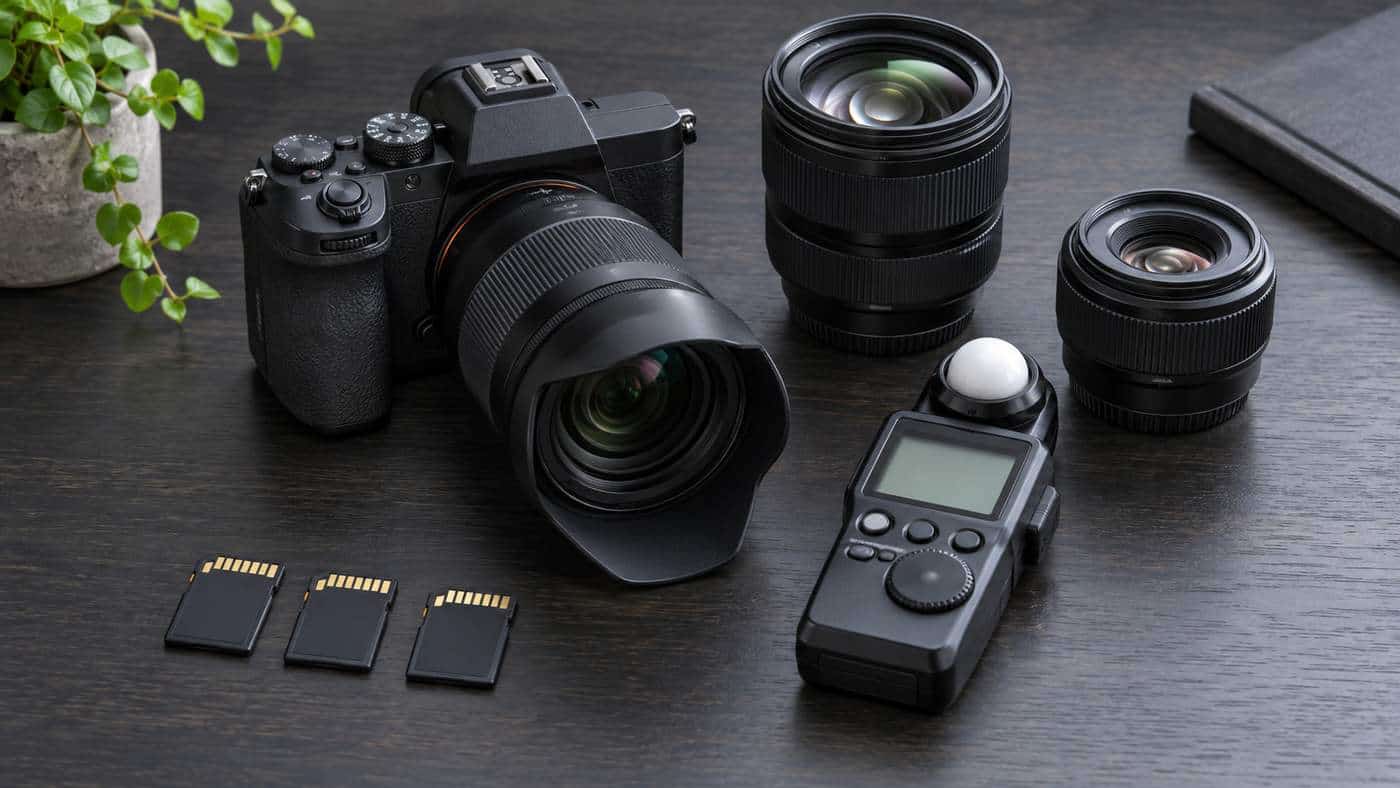
In short: Becoming a professional photographer offers creative work, flexible hours and a low barrier to entry, but pay is modest and uneven and most photographers run their own business. In the United States the median wage for photographers was $44,660 a year in May 2025, about two-thirds were self-employed, and employment is projected to fall by 1% between 2025 and 2035, according to the Bureau of Labor Statistics (BLS).
This guide sets out the main advantages and disadvantages of becoming a professional photographer and building a photography career. It uses US government labour data because it is the most detailed public source. The picture in other countries will differ, but the trade-offs are similar. It is part of an independent guide to fashion photography and is not the official website of Patrick Demarchelier or his estate.
Some terms. A professional photographer is someone paid to make photographs, as opposed to a hobbyist. Self-employed means working for yourself rather than for an employer. A portfolio is a collection of work that shows a photographer’s style and skill. An assistant helps an established photographer with lighting, kit and shoots.
What does a professional photographer do?
The BLS describes photographers as people who use technical expertise and creativity to make and preserve images of people, places, merchandise and other subjects. Typical duties include marketing their services, planning composition, using lighting equipment, editing images with software, maintaining a digital portfolio and archiving their work.
The main types listed by the BLS are aerial, commercial and industrial, fine arts, news and portrait photographers. Fashion work usually falls under commercial photography, which covers models, merchandise and magazine covers. For how fashion photography developed, see our history of fashion photography.
The advantages of becoming a professional photographer
Creative work you can see
The BLS lists artistic ability as a core quality: photographers use colour, shadow, light and distance to compose images. For many people this is the main reason to do the job. Each shoot produces a finished result.
A low barrier to entry
The BLS says photographers typically need a high school diploma to enter the occupation, and postsecondary education is not always required. Many take classes or a certificate or degree to improve their skills, but skill is usually built through years of practice.
Flexibility and independence
Part-time work is common and hours are often flexible, according to the BLS. Because 67% of photographers were self-employed in 2025, many choose their own clients, projects and schedule.
Variety of settings
Photographers work in studios and on location, indoors and outdoors, and some travel locally or abroad. News photographers may cover events at short notice, and aerial photographers work from planes, helicopters or drones.
The disadvantages of becoming a professional photographer
Modest and uneven pay
The BLS gives a median hourly wage of $21.47 in May 2025, equal to $44,660 a year. The lowest 10% earned less than $14.82 an hour and the highest 10% more than $44.14 an hour. Income for self-employed photographers can rise and fall from month to month.
Running a business
A self-employed photographer is also a small business owner. Self-employed photographers also advertise, schedule appointments, buy supplies, keep records, charge customers, pay bills and sometimes hire staff, the BLS notes. Business, marketing and accounting classes can help. Our guide to advertising photography shows how brands buy this work.
A shrinking job market
Photographers held about 145,000 jobs in 2025. The BLS projects employment to decline by 1% from 2025 to 2035, while still expecting about 10,700 openings a year, mostly to replace people who retire or change careers.
Physical and irregular work
Most photographers stand or walk for long periods and may carry heavy equipment. Schedules can include evenings and weekends, and some work is seasonal: wedding photographers are busiest in summer and autumn, according to the BLS.
Pros and cons at a glance
| Factor | Advantage | Disadvantage |
|---|---|---|
| Pay | Top 10% earn over $44.14 an hour | Median $44,660 a year; bottom 10% under $14.82 an hour |
| Entry | High school diploma typical | Skill takes years of practice |
| Work pattern | Flexible, often part-time | Evenings, weekends, seasonal peaks |
| Employment | About 10,700 openings a year | Projected 1% decline, 2025 to 2035 |
| Independence | 67% self-employed | You also run the business |
All figures are for the United States, from the BLS Occupational Outlook Handbook.

How to become a professional photographer
The BLS describes a common route into a photography career. Photographers often begin as assistants to established professionals, learning on the job and building a portfolio. They learn photo-editing software and keep a digital portfolio that art directors and clients review before hiring. Some employers prefer a bachelor’s degree in photography, photojournalism or a related fine arts field.
Important qualities listed by the BLS include artistic ability, business skills, computer skills, customer service, attention to detail and interpersonal skills. Fashion photographers also need to know studio lighting; our guide to studio photography for fashion brands explains the basics.
Many well-known fashion photographers followed this assistant route. The Independent records that Patrick Demarchelier started as assistant to the Swiss fashion photographer Hans Feurer; our profile of Patrick Demarchelier covers his career.
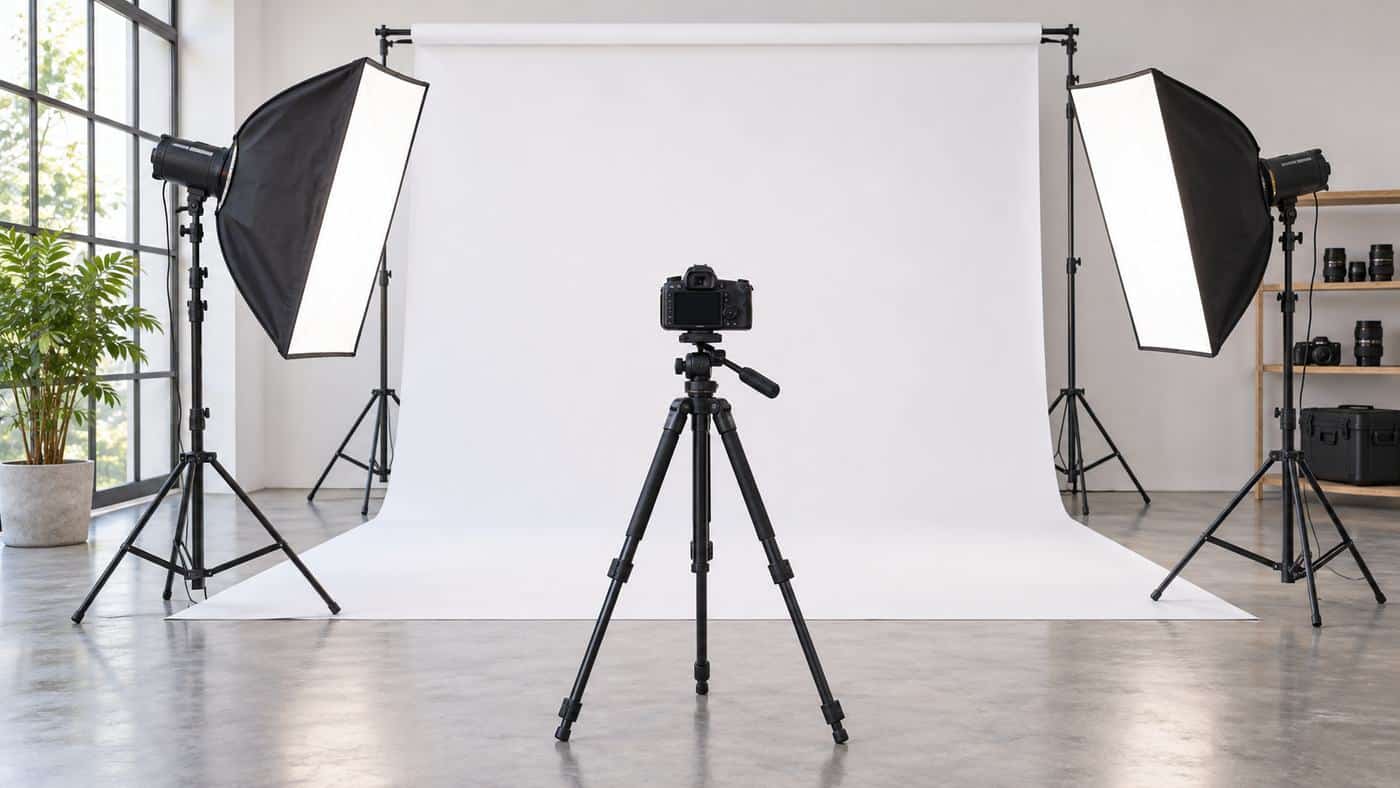
Glossary of photography career terms
- Commercial photographer: photographs buildings, models, merchandise and other subjects for business clients, often on location, according to the BLS.
- Portrait photographer: photographs individuals or groups, sometimes in a studio; wedding and school work usually happens on location.
- Photojournalist: photographs people, places and events for newspapers, television and other media.
- Fine arts photographer: sells photographs as artwork.
- Median wage: the wage at which half of workers earn more and half earn less.
- Openings: the BLS estimate of job vacancies each year, including those created when people retire or change careers.
- Postproduction: the editing, colour correction and retouching done after a shoot.
Knowing which of these paths you want helps decide what to put in a portfolio, which clients to approach and which skills to learn first.
Key takeaways
- The US median wage for photographers was $44,660 a year in May 2025.
- About two-thirds of photographers are self-employed and run their own business.
- A high school diploma is the typical entry level, but skill takes years to build.
- Employment is projected to fall 1% from 2025 to 2035, with about 10,700 openings a year.
- Assisting an established photographer and building a portfolio is a common route in.
Common questions
How much does a professional photographer earn?
In the United States the median was $21.47 an hour, or $44,660 a year, in May 2025, according to the BLS. Pay varies widely by type of work and client.
Do you need a degree to be a photographer?
Not usually. A high school diploma is typical, though some employers prefer a bachelor’s degree in photography or a related field.
Is photography a growing career?
Not in the US: the BLS projects a 1% decline from 2025 to 2035, though about 10,700 openings a year are still expected.
What is the biggest disadvantage of being a photographer?
For many it is uneven income combined with the work of running a business, since most photographers are self-employed.
How we put this together: pay, employment and outlook figures come from the US Bureau of Labor Statistics Occupational Outlook Handbook and its employment projections matrix, using the latest figures published in 2026. Figures for other countries are not included.
Sources
- BLS, Occupational Outlook Handbook: Photographers
- BLS, Employment projections matrix: Photographers
- BLS, Film and video editors and camera operators
- The Independent, Patrick Demarchelier obituary
- Wikipedia, Photographer